Reviewing Love the Gnome You re with for Embroidery
As a designer who has spent years digitizing and stitching thousands of projects, I have learned that not every cute graphic translates well to thread. When I first encountered Love the Gnome You re with, my initial reaction was one of cautious optimism. The concept is undeniably charming—a playful pun on a classic Valentine’s sentiment paired with whimsical gnome imagery. However, charm alone does not make a viable machine embroidery design. I needed to know if this asset would hold up under the needle, especially when applied to real-world products for my craft business.
The source material describes these as high-quality vector SVG files and PNGs with transparent backgrounds, which are excellent for printing on mugs, cards, and invitations. But for those of us in the Crafts sector focusing on textiles, the transition from digital Graphics to physical stitch requires careful evaluation. I decided to test this design by preparing a custom embroidered tote bag, a staple item for any small shop product line, to see how the visual personality of the gnome would translate into thread.
First Impressions and Visual Mood
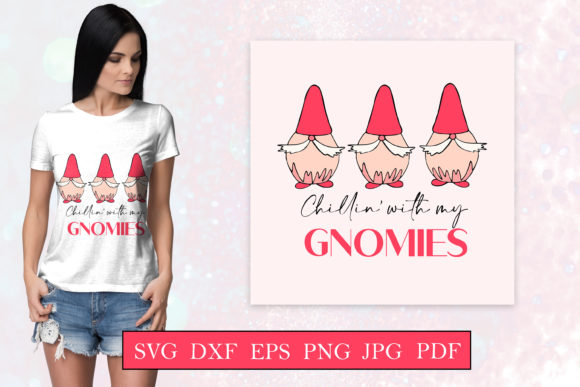
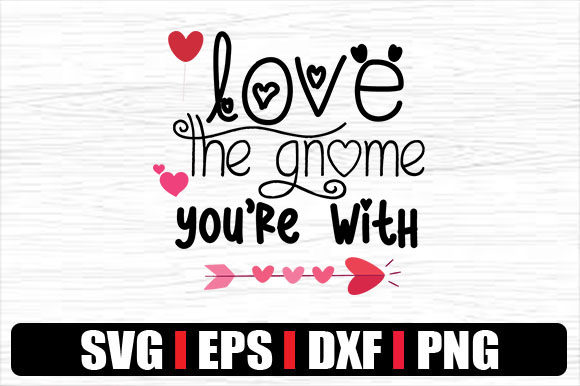
The layout of Love the Gnome You re with creates an immediate sense of warmth and humor. It fits perfectly into the niche of holiday embroidery, specifically targeting Valentine’s Day without being overly romantic or serious. For an Etsy seller or boutique owner, this mood is valuable because it appeals to a broad audience, including friends, family members, and even coworkers. The visual personality is lighthearted, relying on the recognizable silhouette of a garden gnome to carry the joke.
From a design perspective, the balance between text and image is crucial. If the lettering is too small or the gnome details are too intricate, the design risks becoming a muddy mess after stitching. In my review, I looked closely at the potential for clarity. The playful nature of the quote suggests that the font should be bold enough to read from a distance, while the gnome elements need clean lines to avoid excessive jump stitches or thread breaks.
Real-World Application on Textiles
To truly evaluate this embroidery file, I moved beyond digital mockups and considered its performance on various fabrics. I chose a heavy canvas tote bag for my primary test. Canvas provides a stable surface that handles moderate stitch density well, making it an ideal candidate for testing the structural integrity of the design. The result was promising. The gnome’s hat and beard, likely requiring a combination of satin stitch for smooth edges and fill stitch for broader areas, stood out clearly against the neutral background.
This design is versatile enough for more than just bags. Imagine it on a cozy sweatshirt embroidery project for a winter gift, or as a cheerful accent on a kitchen towel. For baby embroidery, such as a onesie or bib, the whimsical theme is appropriate, but one must be cautious about the size. A smaller hoop size might compress the details, making the text illegible. Therefore, scaling the design appropriately is essential before hitting the start button on your machine.
Challenges with Fabric and Placement
While the design is strong, there are specific scenarios where Love the Gnome You re with requires careful handling. Textured fabrics, such as thick wool or terry cloth, can obscure fine details. If you are stitching on a dark fabric, you must ensure high contrast in your thread colors. A dark brown gnome on a navy blue shirt will disappear. Always test your thread color combinations on scrap fabric first.
Additionally, curved surfaces like caps present a challenge. The distortion inherent in cap embroidery can warp the text, ruining the pun. If you plan to use this as a hat design, consider simplifying the layout or using a larger hoop to maintain proportion. Similarly, stretchy fabrics require a robust stabilizer strategy. Without proper support, the design may pucker, distorting the gnome’s shape and making the final product look amateurish rather than professional.
Enhancing Product Value and Brand Consistency
For commercial embroidery projects, the quality of your design assets directly impacts customer trust. A crisp, well-stitched Love the Gnome You re with adds perceived value to a handmade product. It shows attention to detail and a sense of humor, which can increase buyer engagement on platforms like Etsy. When customers see a clear, vibrant design, they are more likely to perceive the item as a high-quality personalized gift rather than a mass-produced commodity.
Consistency is key for brand building. If your small shop specializes in whimsical, homey items, this design fits seamlessly into your catalog. It complements other holiday embroidery themes and can be part of a seasonal collection. Using consistent thread palettes across different products, such as matching the gnome’s hat color to your brand’s accent colors, helps create a cohesive look that customers recognize and appreciate.
Practical Notes for Designers and Makers
Before integrating this design into your workflow, keep these practical tips in mind:
- Check Stitch Density: High density can cause puckering on thin fabrics. Review the digitizing to ensure it is optimized for the material you are using.
- Test on Scrap Fabric: Never stitch a new design directly on your final garment. Use similar fabric scraps to check for registration issues and thread tension.
- Verify Licensing: Since the source mentions SVG and PNG files for various uses, confirm whether the embroidery version includes commercial rights. Ensure you are allowed to sell finished items featuring this design.
- Contrast Matters: Use black and white mockups to check if the design holds its shape without color. This helps identify areas that might blend together.
- Stabilizer Selection: Choose the right stabilizer for your fabric. Cut-away stabilizers are often best for stretchy knits, while tear-away works well for stable wovens.
In conclusion, Love the Gnome You re with is a delightful addition to any designer’s library, provided it is used with technical awareness. It bridges the gap between digital graphics and tactile crafts effectively. By paying attention to fabric choice, stitch settings, and placement, you can transform this cute concept into a standout embroidered patch, tote bag design, or holiday gift that resonates with customers. It is not just about the image; it is about how that image lives in the real world, stitched with care and precision.